This post was sparked by a letter to the San Mateo Daily Journal by council member Neil Layton. You can find the letter online here.
In earlier posts I’ve argued the way Measure G is being sold — as a response to an impending crisis involving public safety funding, street repair and vehicle license fee monies being withheld by the State — is misleading. The campaign’s arguments do not reflect, as best as I can tell, the Council’s perspective on the city’s finances. Rather than view Measure G as something needed to respond to a crisis, I’ve argued it’s better viewed as giving the city more money to maintain and/or add “nice to have” things.

The other day Council member Neil Layton sent this letter to the Daily Journal (emphasis added):
Editor,
The issue before voters is whether San Carlos should establish an additional ongoing source of locally controlled revenue to help maintain city services and infrastructure and plan for future community investments.
For taxable purchases, the math is straightforward:
$100 purchase → 50 cents more
$1,000 purchase → $5 more
$10,000 in annual taxable purchases → $50 more
$50,000 in annual taxable purchases → $250 more
San Carlos’ current sales tax rate is 9.375%. A half-cent increase would bring it to 9.875%, the same rate currently paid in Belmont, Redwood City, San Bruno, Daly City, South San Francisco, Pacifica and several other San Mateo County cities.
Many people providing their opinions regarding the sales tax measure focus on specific projects or previous spending to evaluate its necessity. However, they ignore San Carlos maintains 87 miles of streets, 105 miles of sewer pipes, 17 parks and 1,754 storm drains. Our police and fire departments also respond to more than 14,000 calls for service each year in a city of roughly 30,000 people.
Those costs are never going down.
I understand why some residents question the need for additional revenue when the city is not facing an immediate financial emergency. But I would argue that is exactly when we should be having this conversation. Good government should not require a financial emergency before taking action.
This sales tax is not about responding to a crisis today, it is about making sure we don’t face one tomorrow.
Please join me in support.
The text I bolded is another way of saying what I’ve been arguing: the city is not facing an immediate financial emergency, so the measure need not be evaluated as if it was.
You can agree or disagree with the arguments in favor that Neil makes. He may not know as many people as I do for whom any extra tax is a concern; not everyone in San Carlos is well-off.
I do agree with him that costs going forward are, if not ever going to drop, are extremely unlikely to drop. But raising revenue by raising taxes is not the only way to managing increased costs. There are also the options of cutting or reducing programs.
Nobody likes doing that. But that doesn’t mean it shouldn’t be considered.
When I was on the San Carlos school board and we were facing a severe financial crisis that prompted us to put the first-ever school parcel tax on the ballot, we went to great lengths to make as many cuts as we could and to encourage/support the San Carlos Educational Foundation in their effort to get parents to increase their philanthropic donations to the schools. As I recall, our conceptual goal was 1/3 – 1/3 – 1/3: the shortfall was to be met one-third through cuts (which one liked!), one-third through increased donations and one-third through the parcel tax.
I don’t remember if the final results were split that way. But the key point was, we didn’t go to the taxpayers before we committed to significant cuts. We also held many community meetings to explain what the problem was and how we were trying to resolve it.
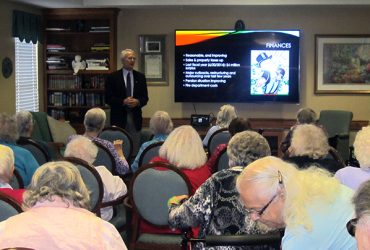
To my knowledge, the Council has not yet looked at any cuts, nor have they held community meetings — which are fundamentally different from public council meetings — to explain the problem and the proposed solution.
That’s why I continue to believe there is no particular urgency necessitating passage of Measure G today. Tomorrow, sure, maybe.
But for now, Measure G should be looked at as a way to give the Council more money to maintain or add “nice to have” things.