






This is a more in-depth look at the misrepresentations the Yes on G campaign is making. I referenced it in a letter to the editor I sent to the San Mateo Daily Journal and the Palo Alto Daily Post.
Table of Contents
- Summary
- Background
- Overall Observations
- Observations about Measure G Campaign Issues
- Evidence of Significant Financial Strength
- A Bone to Pick about Reserves
- Conclusion
Summary
The way San Carlos’ Measure G, increasing sales taxes, is being sold is very much at odds with how city staff and the city council appear to view the city’s situation. Far from there being a financial crisis, or even significant challenge, this is just about giving the city more money to further improve quality of life issues. To fund nice to haves rather than must haves.
Background
Yes on San Carlos Measure G claims new taxes are needed to protect police and fire services, repair aging infrastructure and roads, and replace the state’s failure to provide vehicle license fee (VLF) revenues.
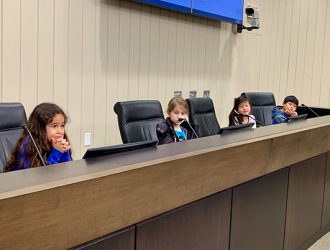
It occurred to me I could validate these arguments by listening to the City Council’s annual budget review and approval discussion, which took place on 6/22/2026. You can find the recorded meeting video at https://www.youtube.com/watch?v=OpKrJxeXVow. The budget discussion starts about 52 minutes in.
Overall Observations
Adam Rak was not present. I know Adam, and if there was a financial crisis, or even serious challenge, looming, he would’ve been there, full stop. Not to mention the rest of the Council would want everyone in attendance and schedule the item so that would happen. That’s what we did years ago when I was on the school board, and we ran into a financial crisis. Not to mention we also held many community meetings and trimmed many programs, neither of which the Council has found it necessary to do today.
Crises come in all sizes. But Adam not attending and the absence of higher energy community engagement by the Council argues the need for Measure G is much less than its proponents are arguing.
The Council appeared to have only some minor concerns about the future. Their overall tone was positive, and appreciative of how good a job staff does budgeting. Plus, several members expressed excitement over new community events coming soon. Hardly what you’d expect if there was a crisis brewing.
The lack of concern could be seen in another way, too. The city does a full budget every other year, and this year is an off year, when only minor tweaks are addressed. Unless, of course, a serious new problem has appeared…which argues that, right now, there isn’t any serious problem facing the city.
In fact, the results after the first year of the current two-year budget were better than anticipated when the budget was approved last year: a half million dollar projected deficit turning into an expected nearly $2+ million surplus.
Observations about Measure G Campaign Issues
There was absolutely no discussion of anything related to police and fire services. If new taxes were needed to preserve either or both functions, why was that not at least mentioned?
There was no discussion of trimming staff or programs to meet financial challenges. Instead, a few new positions were approved for the Parks & Recreation department.
“Infrastructure” is one of those words that means different things to different people. But despite the Measure G campaign highlighting the need to keep our roads under repair, staff recommended and the Council approved moving $2 million out of the road repair fund because that fund was taking in more money than expected.
The City never budgets for VLF monies from the state because the state is too unreliable in providing them. They only look at spending the money after they get it. Staff also reported they expected the state to come through with at least two-thirds of what the city is owed. Neither staff nor the Council seemed concerned about all of this; it was simply business as usual.
Which means not receiving VLF funds cannot be part of a crisis.
Evidence of Significant Financial Strength
The city’s finances were strong enough staff recommended and Council approved moving $12 million out of “restricted” reserves into the capital fund, which pays for major civic improvement projects, like the downtown rebuild and the Holly 101 improvement project.
After that transfer, the presentation showed the city could cover nearly twenty years of potential budget deficits out of the remaining $38 million of “restricted” reserves.
That $38 million in reserves buys a lot of time to re-balance the budget, without any new taxes. And as staff pointed out, because the city budgets conservatively, they often end up running minor surpluses when they expected minor deficits (like what happened between 6/2025 and 6/2026).
Staff also mentioned in passing that their presentation included a recent significant prepayment of employee pension obligations. That’s not something a city would do if they were concerned about their near-term fiscal outlook.
A Bone to Pick about Reserves
Calling all of those reserves restricted is another misrepresentation, albeit an inside baseball one. Yes, some reserves are truly restricted, by law or having been committed to an approved contract. But public agencies love to call all reserves restricted when in fact most of them are just earmarked, for specific purposes, and can be redirected at any time by a simple majority vote of the Council. When I served on the Council, I required the annual budget presentation highlight that distinction. It looks like current practice has reverted to the earlier, less transparent, approach.
Conclusion
Whatever your views about whether voters should increase city funding through higher taxes, shouldn’t we be making our choices based on valid and accurate information? I sure hope everyone agrees on that!
But that’s not what the Measure G campaign is doing.
In my MBA program we used to say, “Are we marketing or are we lying?” Sometimes it’s hard to tell, because there is always ambiguity about what’s real when you’re dealing with fuzzy concepts (“Our ketchup is the best!”).
But, lacking a crisis, or even a significant near-term challenge (as evidenced by the tone and details of that budget discussion), the Measure G campaign seems to be attempting to manufacture one out of whole cloth.
That’s a bridge too far, for me. Your mileage may vary.
It’s also a startling lack of transparency. I don’t know if any of the Council members are actively working on the Measure G campaign, but every one of them (like every other local elected official) ran on a platform that highlighted the importance of transparency and often called for increasing it.
Maybe they just forgot to ask the Measure G campaign to stay closer to the marketing end of the spectrum.